How B-School Life Shapes You Beyond the Classroom
SSIM Hyderabad
Author
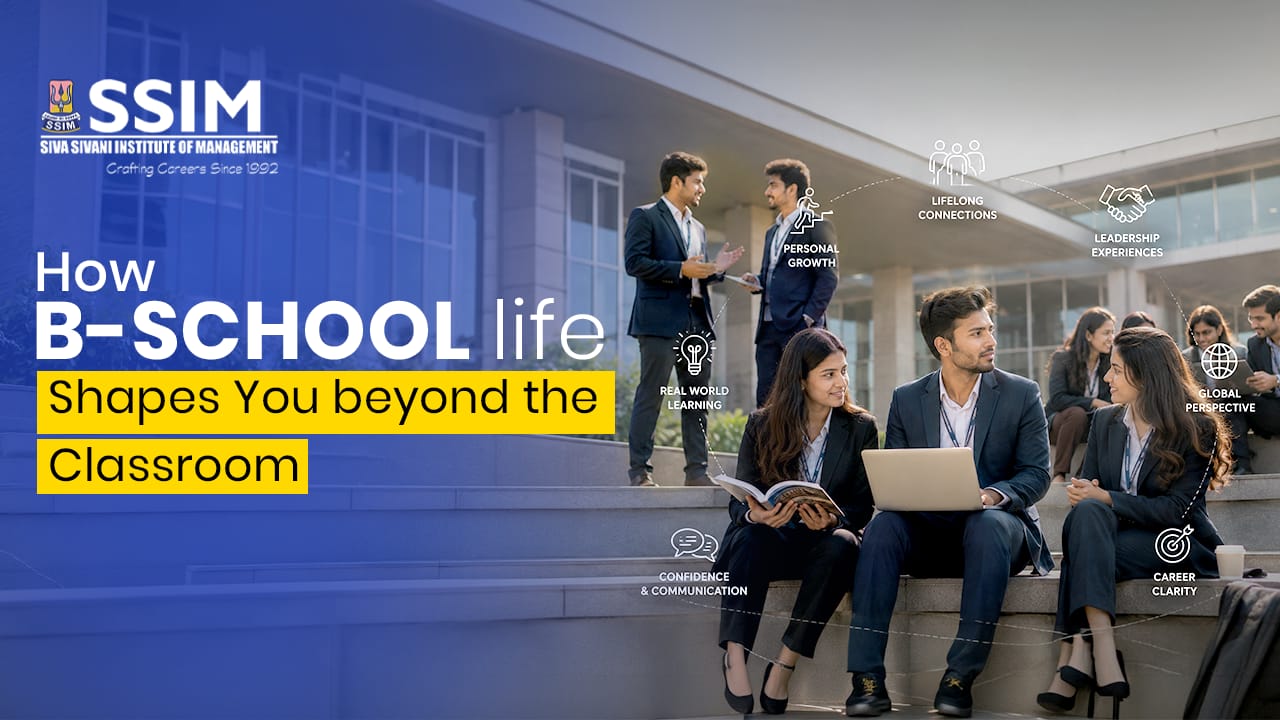
When students compare B-schools, placements, rankings, and curriculum often dominate the conversation. Yet some of the most valuable lessons in management are learned beyond lectures and textbooks. Student clubs, industry interactions, competitions, and campus experiences play a significant role in shaping future leaders and preparing them for the workplace.
From student clubs and industry events to case competitions and leadership opportunities, B-school life helps you build the confidence, skills, and professional mindset employers value. So, if you’re exploring the best B-school in Hyderabad or comparing the famous PGDM colleges in Hyderabad, don’t just look at what you’ll learn, look at who you’ll become.
Beyond Academics: What B-School Life Really Offers
B-school life beyond academics refers to the practical, experiential, and interpersonal learning that happens through clubs, committees, internships, cultural events, and peer interactions alongside formal coursework. It’s the difference between knowing management theory and actually knowing how to manage people, time, and ambiguity.
PGDM 2026–28 · Admissions Open
Shape your management career at SSIM
Employers consistently emphasize that while technical knowledge helps candidates get shortlisted, soft skills and real-world experience often influence hiring decisions. According to the National Association of Colleges and Employers (NACE), communication, teamwork, critical thinking, and problem-solving are among the most sought-after competencies in new graduates.
Leadership Development: Learned, Not Taught
Leadership isn’t a chapter you memorize; it’s a skill you build by leading.
- Heading a student committee teaches decision-making under pressure.
- Managing a team project surfaces the difference between authority and influence.
- Handling disagreements within a group builds emotional intelligence.
Most top PGDM colleges in Hyderabad create structured opportunities for student councils, club leadership roles, and event ownership so students practice leadership in low-stakes environments before they do it professionally.
Communication Skills: Built Through Everyday Practice
Every group discussion, client pitch simulation, and public forum sharpens communication in ways lectures can’t.
How does B-school improve communication skills? Through repeated, real practice: presenting in front of peers, defending viewpoints in case study discussions, writing reports, and negotiating during simulations. Over two years, students naturally move from hesitant speakers to confident communicators.
The growing importance of communication skills is reflected in workplace trends as well. According to LinkedIn data, communication has remained the most in-demand professional skill, while 9 in 10 global executives say soft skills such as communication, leadership, and teamwork are more important than ever in today’s workplace.
Practical examples students encounter:
- Pitching a business idea to a panel
- Representing their college at inter-B-school competitions
- Writing persuasive reports for live projects
Networking: Building Relationships That Outlast the Degree
Networking in B-school isn’t about collecting contacts; it’s about building genuine professional relationships.
- Peer networks often become future business partners or industry contacts.
- Alumni networks open doors to mentorship and job referrals.
- Faculty and visiting industry experts provide guidance that extends well beyond placement season.
A well-connected campus ecosystem, especially one with strong industry ties, gives students a head start that resumes alone can’t provide.
Clubs and Committees: The Real Training Ground
Clubs are where classroom concepts meet practical execution. Marketing clubs run real campaigns. Finance clubs analyze live markets. Cultural committees manage budgets, vendors, and timelines, essentially running a small business.
For example, a student leading the annual management fest may coordinate sponsors, manage budgets, negotiate with vendors, and oversee volunteer teams. These responsibilities closely mirror the planning, collaboration, and decision-making expected in corporate roles.
Industry Exposure and Internships: Where Theory Meets Reality
Internships are frequently cited as the single most transformative part of a PGDM programme. They:
- Validate whether classroom concepts hold up in real business environments
- Help students identify genuine career interests
- Build professional networks before graduation
- Often convert into pre-placement offers
Guest lectures, industry visits, and live projects supplement internships by keeping students updated on real market trends rather than outdated case studies.
Faculty mentors often note that students demonstrate the greatest professional growth after applying classroom concepts through internships, live projects, and industry interactions.
Time Management: The Skill Everyone Underestimates
Balancing academics, assignments, internships, and extracurriculars teaches students something no textbook can: how to prioritize under pressure.
Common strategies students develop:
- Using weekly planners to balance deadlines
- Learning to say no to low-priority commitments
- Batching similar tasks (readings, case prep) together
This becomes second nature by the time students enter the workforce, where multitasking is the norm, not the exception.
Personal Growth: The Quiet, Ongoing Transformation
Perhaps the most understated outcome of B-school life is personal growth. Living away from home, managing finances, navigating disagreements, and handling failure independently all contribute to emotional maturity.
Many students enter B-school with limited confidence in areas such as public speaking, leadership, or teamwork. Through committee responsibilities, case competitions, presentations, and internships, they often graduate as more confident, self-aware professionals who are better prepared to navigate workplace challenges.
Actionable Takeaways for PGDM Aspirants
If you’re choosing among the top PGDM colleges in Hyderabad, consider these factors beyond just academics:
- Look for active clubs and committees — they indicate a hands-on learning culture.
- Check internship and live-project opportunities — real exposure matters more than theoretical depth alone.
- Assess the alumni network’s strength — mentorship and referrals can shape early career trajectories.
- Evaluate leadership opportunities — committee roles, event heads, and student council positions build practical skills.
- Notice the campus culture — cultural diversity and event participation reflect a well-rounded environment.
Final verdict
The best B-school experience doesn’t end with earning a PGDM. It leaves you with the confidence to lead teams, the ability to solve problems, the mindset to embrace change, and a professional network that supports your career long after graduation. Those are the lessons that truly shape you beyond the classroom.
Ultimately, the true value of a B-school lies not only in the qualification it offers but also in the professional mindset and practical skills students develop throughout the journey.
FAQS
1. What is B-school life beyond academics?
B-school life beyond academics includes clubs, committees, internships, industry events, competitions, and networking opportunities that help students build practical and professional skills.
2. Why are extracurricular activities important in a PGDM programme?
They help students develop leadership, communication, teamwork, and problem-solving skills while applying classroom concepts in real-world situations.
3. How do student clubs benefit PGDM students?
Student clubs help students develop leadership, teamwork, project management, and networking skills through practical activities.
4. How does B-school life prepare students for corporate careers?
It exposes students to internships, live projects, presentations, networking, and collaborative work, helping them adapt to real workplace expectations.
5. What should I look for besides placements when choosing a B-school?
Consider the quality of internships, industry exposure, student clubs, leadership opportunities, the alumni network, and overall campus culture.
